Blog
Insights and tips on improving your communication skills

Public Speaking Tips for Students: How to Present in Class Without Freezing
Class presentations don't have to be terrifying. Practical public speaking tips for high school and college students, from preparing to steadying a shaky voice.

Impromptu Speaking: How to Speak Well on the Spot (Structures and Exercises)
Put on the spot and your mind goes blank? Learn simple impromptu speaking structures, how to start strong, and daily exercises to think on your feet.

How to Sound Confident When Speaking (Even When You're Not)
Sounding confident is a set of voice habits, not a personality. Learn how to steady your voice, cut hedges, and sound sure of yourself at work and beyond.

How to Sound Confident on the Phone: Voice, Pace, and What to Say
On a call, your voice does all the work. Here's how to sound confident on the phone, calm your nerves before you dial, and practice until it feels normal.

How to Speak Confidently on Camera: Tips to Look and Sound Natural on Video
Freezing up when the red light comes on is normal. Here's why cameras feel so awkward and the simple habits that help you sound calm and natural on video.

How to Not Get Nervous Speaking in Public (and Sound Calm When You Are)
Nerves before speaking are normal and mostly invisible. Here's why they happen, how to calm them, and how to keep a shaky voice and fast pace in check.

How to Sound Confident in an Interview: Voice, Pace, and Answers That Land
You can feel nervous and still sound confident. Here's how to steady your voice, pace, and answers for in-person, video, and phone interviews.

How to Speak More Clearly: Exercises to Stop Mumbling and Be Understood
Tired of people asking you to repeat yourself? Learn why speech gets unclear and the simple daily exercises that help you speak more clearly.

Filler Words in an Interview: How to Stop Saying Um and Sound Prepared
Saying um in an interview is common and fixable. Learn why it happens, what to say instead, and the practice drills that help you answer cleanly.
How to Be More Articulate: 7 Habits and Daily Exercises to Speak Clearly
Being articulate is a skill, not a gift. Learn the habits that make speech clear and confident, plus daily exercises to train yourself to be more articulate.
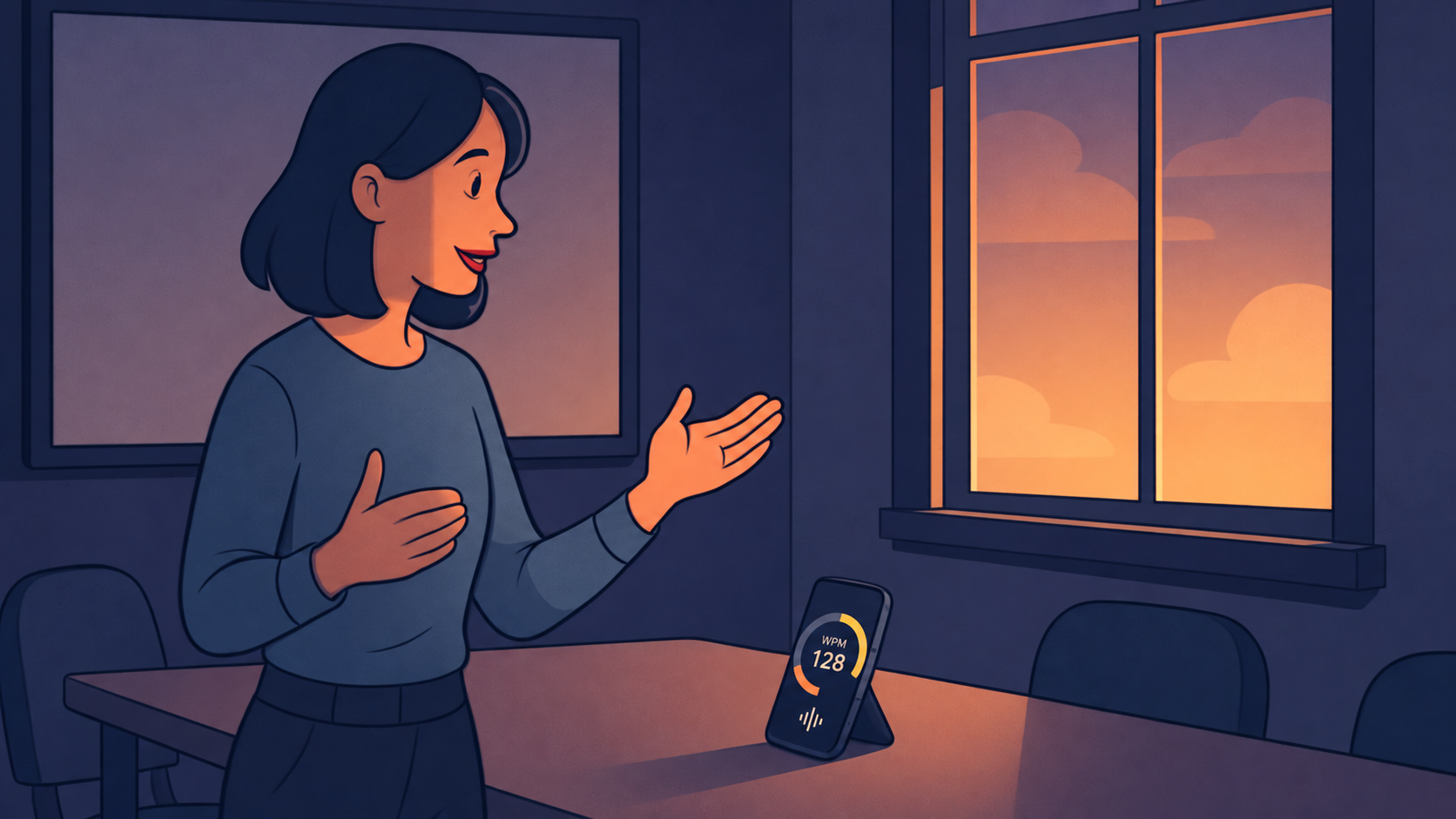
Normal Speaking Pace: How Many Words Per Minute Is Ideal (and How to Find Yours)
What's a normal speaking pace in words per minute? Learn the usual ranges, how to measure your own speaking speed, and simple drills to slow down.

How to Stop Saying Like: Why It Happens and How to Say It Less
Saying like in every sentence is a habit you can retrain. Learn the jobs "like" is doing, what to say instead, and daily drills to say it less.

Filler Words: 35+ Examples, What They Mean, and Why We Use Them
A list of 35+ common filler words and phrases, what each one is doing in your speech, and which ones are worth cutting before your next interview or talk.

How to Stop Saying Um and Uh: 5 Steps and Daily Exercises
Saying um is a habit, not a personality trait. Here's why it happens, how to replace it with a pause, and the daily exercises that make the change stick.

How to Command a Room in 30 Seconds: The Opening Lines That Set the Tone for Everything
Your audience decides whether to trust you before you finish your first sentence. Learn the science-backed opening techniques that top speakers use to capture attention, build credibility, and set the tone for everything that follows.

What AI Speech Analysis Reveals About the Habits of the World's Top Speakers
AI tools now analyze millions of speeches and presentations, uncovering the exact vocal patterns that separate elite communicators from everyone else. From speaking pace to filler word frequency, here's what the data says about how the world's best speakers actually talk.

How to Record, Review, and Actually Improve Your Speaking Skills Using Your Phone
Your smartphone is the most underused speaking coach you already own. Learn the science-backed record-review-repeat cycle, how to get past the cringe of hearing your own voice, and how AI-powered analysis can turn your phone into a data-driven speech improvement tool.

The Beginner's Roadmap to Public Speaking: Where to Start When Everything Feels Overwhelming
Public speaking anxiety affects roughly one in three adults, yet research overwhelmingly shows it is a trainable skill, not a fixed trait. Here is a practical, step-by-step roadmap for going from terrified beginner to confident speaker, backed by neuroscience, expert advice, and the latest AI-powered practice tools.
How to Speak Up in Meetings Without Losing Your Train of Thought
You had the perfect point ready, but the moment you started talking, your mind went blank. Here's why your brain stalls in meetings and the practical techniques you can use to speak up clearly, stay on track, and never lose your train of thought again.

From Boring to Bravo: 7 Data-Backed Techniques to Make Any Presentation Memorable
Most people forget 90% of a presentation within a week, and 79% of audiences say most presentations are boring. But the gap between forgettable and unforgettable isn't talent. It's a set of seven evidence-backed techniques drawn from cognitive science, neuroscience, and analysis of the world's top speakers.

Why the Best Speakers Sound Like They're Having a Conversation (And How You Can Too)
The world's top speakers don't sound polished, they sound human. Princeton neuroscience reveals that conversational delivery literally synchronizes your brain with your audience's, boosting trust, retention, and persuasion. Here are seven research-backed techniques to make every talk feel like a one-on-one conversation.
The 5-Minute Daily Practice That Transforms Average Speakers Into Captivating Ones
Most people think becoming a great speaker requires months of coaching or hours of rehearsal. The science says otherwise. Just five minutes of targeted daily practice can rewire your brain, eliminate bad habits, and turn you into the kind of speaker people actually want to listen to.