How to Command a Room in 30 Seconds: The Opening Lines That Set the Tone for Everything
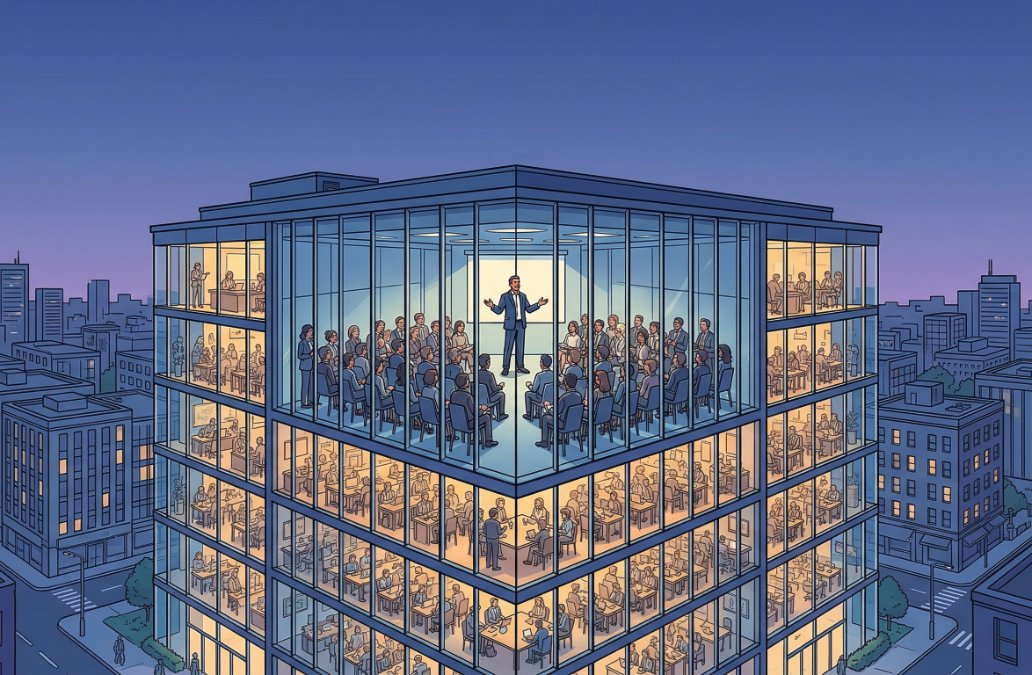
Think about the last presentation you sat through. Can you remember how it started? If the speaker opened with "So, um, today I'm going to talk about..." you probably checked out before they hit their second slide. But if they opened with a story, a surprising fact, or a question that made you lean forward, you likely stayed engaged for the entire thing.
That's not a coincidence. Research shows that audiences form lasting judgments about a speaker in under seven seconds. And those snap judgments don't just fade away. They color every single thing you say afterward. The good news? Commanding a room in your opening moments is a skill you can practice and improve, not some mysterious gift reserved for natural-born speakers.
The Science of Why Your First 30 Seconds Matter More Than the Next 30 Minutes
The research on first impressions is striking in its speed. Princeton psychologists Janine Willis and Alexander Todorov found that people form judgments about trustworthiness, competence, and likeability after just 100 milliseconds of exposure to a face. That's faster than a blink. Extending the exposure to a full second didn't improve accuracy. It only increased the viewer's confidence in the snap judgment they'd already made.
Harvard social psychologist Amy Cuddy spent over 15 years studying how people evaluate others and found it comes down to two questions: "Can I trust this person?" and "Can I respect this person?" Warmth gets assessed first and weighted more heavily. For speakers, this means establishing trust has to come before demonstrating expertise.
Here's where it gets really interesting for presentations. Vanessa Van Edwards and her Science of People lab ran a study with 760 volunteers rating hundreds of hours of TED talks. Participants who watched only the first seven seconds of a talk gave charisma, credibility, and intelligence ratings that matched viewers who watched the entire 18-minute presentation. Even when the clips were shown on mute, the ratings still held up.
This happens because of two well-documented cognitive biases working in your favor (or against you). The primacy effect means information presented first creates a mental framework that filters everything after it. The halo effect means one strong positive impression radiates outward across unrelated traits. Nail your opening, and your audience will perceive you as more intelligent, credible, and knowledgeable for the rest of your talk. Stumble through it, and you'll spend the next 20 minutes fighting an uphill battle you may never win.
Five Opening Techniques That Actually Work (With Real Examples)
Carmine Gallo analyzed over 500 TED talks for his book Talk Like TED and found that stories account for roughly 65% of content in the most successful presentations. TED curator Chris Anderson backs this up, advising speakers to script the opening minute and the closing lines because those are the most important parts of any talk.
But stories aren't your only option. The best openings fall into five categories, and each one works because it creates what psychologists call an "open loop," an unresolved tension the audience needs to close.
The Provocative Question. Simon Sinek opened his 60-million-view TED talk by asking, "How do you explain when things don't go as we assume?" The question immediately reframes something familiar and signals the talk will challenge conventional thinking. You can use this technique in any meeting or presentation by opening with a question your audience has been silently asking themselves.
The Surprising Statistic. Jamie Oliver made data visceral in his TED talk by saying that in the 18 minutes of his presentation, four Americans would die from food-related causes. By tying the number to the real-time duration of his talk, he made it impossible to dismiss. The key is choosing a statistic that's specific, unexpected, and personally relevant to your audience.
The Personal Story. Bryan Stevenson received the longest standing ovation in TED history. He opened not with criminal justice statistics but with a story about his grandmother, because everyone can relate to a grandmother. He spent 65% of his talk on personal stories, building the emotional foundation that made his data land much harder when it came.
The Disarming Humor. Sir Ken Robinson opened the most-viewed TED talk in history (over 75 million views) with casual, conversational humor that made a profound argument about education feel like a dinner party chat. Natural humor works because it instantly signals warmth (the trait audiences assess first) and lowers the room's defenses.
The Bold Statement. Pamela Meyer opened her talk on deception with a flat declaration that got the audience's attention immediately. Daniel Pink opened his motivation talk with a confession about something he regretted. Both approaches work because they signal vulnerability and confidence at the same time, a combination audiences find irresistible.
The Mistakes That Kill Your Credibility Before Your Message Begins
Speech coaches are remarkably unified on what destroys an opening. The most common failure is the meandering non-start. Phrases like "So today I'm going to talk about..." or "Let me just pull up my slides..." signal low energy and zero preparation. You're burning through the most attentive moment your audience will ever give you.
Apologizing is equally damaging. Saying "Sorry, I'm a bit nervous" or "I didn't have much time to prepare" invites your audience to look for problems they might never have noticed on their own. As certified speaking professional Patrick Donadio puts it, the audience doesn't know what your problems are, so there's no reason to broadcast them.
Other credibility killers include reading directly from slides (you are the main event, your slides are just the support), starting with logistics or housekeeping items, and opening with the classic dictionary definition. Every second spent on throat-clearing, self-deprecation, or administrative filler is a second of maximum attention wasted forever.
The fix is simple but requires discipline: write your opening line, memorize it, and deliver it with intention. No preamble. No warm-up chatter. Walk to the front of the room, pause for two to three seconds, make eye contact, and deliver your first line like it's the most important thing you'll say. Because it is.
How Your Voice Sets the Tone (Even More Than Your Words)
Research published in the Journal of Personality and Social Psychology found that speakers using vocal authority markers were rated 26% more competent and 32% more leader-like, regardless of what they were actually saying. Your voice is doing heavy lifting in those first 30 seconds, and most speakers never think about it.
The sweet spot for speaking pace sits around 140 to 160 words per minute. Fast enough to convey energy, slow enough to project authority. For reference, popular TED speakers average about 173 words per minute, with Brene Brown at roughly 154 and Tony Robbins closer to 201. Once you go above 190 words per minute, audience comprehension drops by 17 to 25%.
The most underused technique in public speaking is the power pause. A deliberate three to five seconds of silence before your first word does something remarkable. It signals confidence, commands attention, and creates anticipation. Speakers consistently overestimate how long their pauses feel to audiences. What feels like an eternity to you reads as composed authority to the room.
Beyond pace and pauses, pitch variation matters enormously. Neuroimaging research shows that monotone speech triggers far fewer brain responses than varied delivery. Changing your pitch, pace, and volume throughout your opening can improve audience recall by up to 40%. The takeaway is clear: a well-delivered average line beats a brilliant line delivered in monotone every single time.
How to Practice Your Opening (A System That Actually Works)
Knowing these techniques is one thing. Internalizing them is another. Here's a practical system for building a commanding opening.
Start with the three-variations drill. For any upcoming presentation or meeting, write three different openings: one using a question, one using a story, and one using a surprising statistic. Practice each one out loud (not in your head, out loud) and notice which feels most natural. This builds range and helps you discover your strongest opening style.
Next, record yourself. Most people hate watching themselves speak, but it's the fastest path to improvement. You don't need fancy equipment. Your phone works perfectly. Record your 30-second opening, watch it back, and ask yourself three questions: Did I start with energy? Did I avoid filler words? Did I make eye contact with the camera (or an imaginary audience)?
This is exactly the kind of focused practice that an app like Articulate is built for. You get a prompt, record yourself speaking for 60 seconds, and receive AI-powered feedback on your transcript, including filler word counts, pacing analysis, and clarity scores. The beauty of short-form recorded practice is that it mirrors the real challenge: delivering a strong, concise opening under mild pressure. Doing this daily builds the muscle memory that makes a polished opening feel effortless in the moment.
For vocal warm-ups before any high-stakes speaking situation, try the "Lion-Mouse" exercise. Alternate between speaking as loudly and expansively as you can (the lion) and as softly and precisely as you can (the mouse). This wakes up your full vocal range and prevents the flat, nervous delivery that plagues most unpracticed openings.
Finally, embrace the rehearsal paradox that presentation expert Nancy Duarte identifies: the more thoroughly you rehearse, the more natural and improvisational you sound. The speakers who look effortless on stage aren't winging it. They've practiced their opening dozens of times until the words feel like a conversation, not a script.
Your Opening Is a Trainable Skill, Not a Natural Gift
The research is clear on this point. Audiences make fast, sticky judgments in the first seconds of any speech or presentation. Those judgments are driven more by delivery than by content. And the gap between a forgettable opener and a commanding one isn't talent. It's structured practice with honest feedback.
Start by picking one opening technique from this post (a question, a story, a statistic, humor, or a bold statement) and craft your next presentation's first line around it. Practice it out loud at least five times. Record yourself and review the playback. Pay attention to your pace, your pauses, and your filler words.
If you want to accelerate the process, try Articulate. Record a 60-second response to a speaking prompt, get instant AI feedback on your delivery, and track your improvement over time. Because the speakers who command every room they walk into aren't doing anything mysterious. They've simply practiced their opening more times than everyone else.